NASA Public Archive
Space Videos
A curated archive of NASA public domain footage — cosmic phenomena, deep space imagery, and Earth observations freely shared with humanity.
Earth from Space
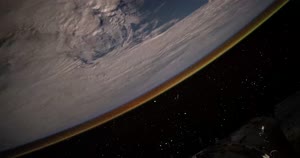
Earth from Space in 4K – Expedition 65 Edition
The people who get to see Earth from space marvel at its beauty, the colors, the fragility they feel about the planet 250 miles below them. This ultra-high definition video, captured during the International Space Station's Expedition 65 (April 17 - Oct. 17, 2021), lets you look at the home planet in all its glory. Credit: NASA/JSC.

Mission Highlights
Perseverance Rover's Descent and Touchdown on Mars: Onboard Camera Views
NASA's Mars 2020 Perseverance mission captured thrilling footage of its rover landing in Mars' Jezero Crater on Feb. 18, 2021. Real footage captured by several cameras that are part of the rover's entry, descent, and landing suite — the descent stage, the rover's up-look camera, the parachute up-look camera, and a down-look camera on the bottom of the rover. Credit: NASA/JPL-Caltech.
Deep Space
First Full-Color Images and Data from the James Webb Space Telescope
NASA, in partnership with ESA and CSA, released the James Webb Space Telescope's first full-color images and spectroscopic data on July 12, 2022. Webb is the biggest telescope ever launched into space — unlocking mysteries in our solar system, looking beyond distant worlds around other stars, and probing the mysterious structures and origins of our universe.
Deep Space
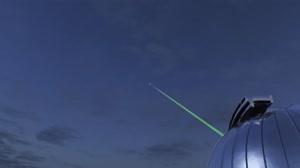
Testing Space Lasers for Deep Space Optical Communications (Mission Overview)
How might lasers revolutionize deep space communications? NASA will test high-bandwidth laser (or optical) communications for the first time beyond the Moon with a pioneering technology demonstration called Deep Space Optical Communications (DSOC). If successful, this kind of laser communications technology could be used to transmit large volumes of data – such as streaming video and higher-resolution science observations – from robotic spacecraft and from future astronauts exploring Mars. DSOC is attached to NASA’s Psyche spacecraft and will send and receive signals during the first two years of Psyche’s six-year journey to the metal-rich asteroid of the same name. During its demonstration period, DSOC will not be transmitting Psyche data, but rather its own set of data. The experiment involves a transceiver on the spacecraft along with two ground stations – one at the Jet Propulsion Laboratory’s Table Mountain facility and the other at Caltech’s Palomar Observatory. Psyche and DSOC are expected to launch in October 2023 Learn more about the DSOC experiment at https://nasa.gov/technology The DSOC experiment is sponsored by the Technology Demonstration Missions program within NASA’s Space Technology Mission Directorate and the Space Communications and Navigation program within the agency’s Space Operations Mission Directorate. The agency’s Jet Propulsion Laboratory manages the DSOC project for NASA. Credit: NASA/JPL-Caltech/ASU Produced by: True Story Films

Deep Space
How NASA’s Deep Space Atomic Clock Could Be the Next Space GPS
NASA has perfected new navigation technology that would make self-driving spacecraft and GPS beyond the Moon a reality. The Deep Space Atomic Clock is the first atomic clock small and stable enough to fly on a spacecraft beyond Earth's orbit. As NASA works to put humans on Mars and the Moon, the clock’s precise timekeeping will be key to these missions’ success. For more about the Deep Space Atomic Clock: https://www.nasa.gov/mission_pages/tdm/clock/index.html
Deep Space
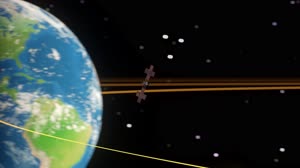
Psyche Mission and Deep Space Optical Communications Animations Media Reel
Animation b-roll for media and public use. NASA’s Psyche mission, scheduled to launch in October 2023, is the first to a metal-rich asteroid (also named Psyche). Attached to Psyche is an independent NASA experiment called the Deep Space Optical Communications (DSOC) technology demonstration. This reel includes animations that help explain the Psyche spacecraft, its journey to the asteroid Psyche, and DSOC. The first animation shows the Psyche spacecraft’s trajectory as it leaves Earth and flies close to Mars for what is called a gravity assist. Following that are animations featuring the components on Psyche with and without labels. The animations also depict the increased data flow from DSOC, which will test high-data-rate laser communications that could be used by future NASA missions. (DSOC will not transmit Psyche data during its technology demonstration period.) Another animation shows how the DSOC transceiver attached to Psyche interacts with systems on the ground. Psyche will launch no earlier than Oct. 12, 2023. The spacecraft will begin to orbit the asteroid Psyche in 2029. For more information about NASA’s Psyche mission, go to: nasa.gov/psyche and psyche.asu.edu/ For more information about DSOC, go to: https://www.nasa.gov/mission_pages/tdm/dsoc/index.html Credit: NASA/JPL-Caltech/ASU
Solar System
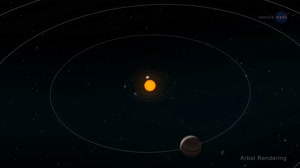
NASA ScienceCasts: Watch the History of our Solar System Fly By with MU69
Scientists are unlocking clues about the earliest formation of our solar system from a Kuiper Belt Object known as 2014 MU69.
Solar System
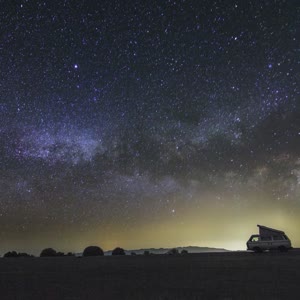
Our Solar System
Stefanie Milam talks about Webb's focus on our solar system.

Earth from Space
Our Planet, Our Home: An Earth Day Perspective
We are all connected to and by Earth --- whether it's the trees and plants that give us the oxygen we breathe, the snow-capped mountains that provide the water we drink, or the breathtaking geophysical forces that shape the land beneath our feet. NASA has over 20 satellites measuring the height of oceans and inland water, clouds and precipitation, carbon dioxide and much more. By understanding our changing world, we improve lives and safeguard our future.
Earth from Space
The Electric Wind of Venus
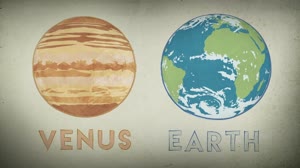
Venus has an "electric wind" strong enough to remove the components of water from its upper atmosphere. This action may have played a significant role in stripping Earth's twin planet of its oceans, according to new research results from the European Space Agency's Venus Express mission led by NASA-funded researchers. Lead author of the research paper, Glyn Collinson, explains that "electric wind" can strip Earth-like planets of oceans and atmospheres.

Nebulae & Galaxies
What's Up: October 2020 Skywatching Tips from NASA
What are some skywatching highlights in October 2020? Not one, but two, full moons; Mars at opposition; and finding the Andromeda galaxy.
Nebulae & Galaxies
KSC-04-S-00174
New information from NASA's Chandra X-ray Observatory is teaching us about the destiny of the universe. A study of 26 galaxy clusters revealed that about 6 billion years ago, the universe began expanding faster. Dark energy is the enigmatic force that scientists believe pushes galaxies apart, causing the expansion. Judging from the Chandra study, the density of dark energy is fairly constant. If this is the case, the universe will slowly expand -- and billions of years from now, our nearest neighbors in space might not even be visible. There is still much to learn, but future studies may help explain how dark energy affects the future of the universe.

Astronaut Footage
The Color of Space: A NASA Documentary Showcasing the Stories of Black Astronauts
The Color of Space captures the personal stories of seven current and former Black astronauts, each selected to become part of NASA's astronaut corps and train for space missions. Current NASA astronauts Stephanie Wilson, Victor Glover, Jeanette Epps, as well as retired astronauts Leland Melvin, Bernard Harris, Robert Curbeam, and Bobby Satcher, speak about their journeys and their motivations in a panel hosted by NASA Johnson Space Center Director Vanessa Wyche, the first Black woman to lead a NASA center. They took the step to achieve the impossible, overcoming barriers and making space for others to follow. In this new documentary, be empowered by the remarkable stories of tenacity, courage, and motivation from the agency's most decorated heroes. Learn about their path to NASA, their sources of inspiration, experiences in space, the importance of representation, the meaning of Juneteenth, and much more. Originally held at Space Center Houston on March 25, the panel discussion marks the first time the seven astronauts have been assembled for an official NASA event. For more details, visit https://go.nasa.gov/3Oktwxa Producer: Jori Kates Editors: Jori Kates and Sonnet Apple Credit: NASA
Astronaut Footage
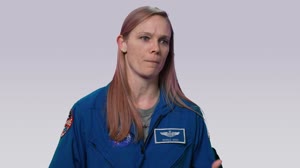
2024 Astronaut Graduating Class, "The Flies," Superlativesjsc2024m000082_2024 Astronaut Graduating Class_The Flies_Superlatives_HQ_MP4_AVAIL
The 2024 astronaut graduating class gives you an insider's look at not only the who's who of their graduating class, but it allows you to get a glimpse of the accomplished astronauts’ personalities. To see them together as a group, connecting through laughter helps to illustrate how much they value team care. These classic superlatives give the scoop on which astronaut is the best dancer, the funniest, and more. Enjoy seeing a lighter side of "The Flies" in this fun and upbeat montage of the 2024 astronaut graduating class.
Astronaut Footage
Becoming Astronauts - Are You Next?
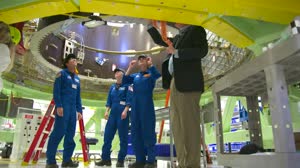
NASA is hiring more new Artemis generation astronauts. Will you be next? NASA's latest astronaut class shares their journey. To join them, astronaut candidates must have earned a master’s degree from an accredited institution in engineering, biological science, physical science, computer science or mathematics. The requirement for the master’s degree can also be met by: • Two years (36 semester hours or 54 quarter hours) of work toward a Ph.D. program in a related science, technology, engineering or math field; • A completed doctor of medicine or doctor of osteopathic medicine degree; • Completion (or current enrollment that will result in completion by June 2021) of a nationally recognized test pilot school program. Candidates also must have at least two years of related, progressively responsible professional experience, or at least 1,000 hours of pilot-in-command time in jet aircraft. Astronaut candidates must pass the NASA long-duration spaceflight physical. Apply to be an astronaut March 2 - 31. For more information about a career as a NASA astronaut, and application requirements, visit: http://www.nasa.gov/astronauts
Nebulae & Galaxies
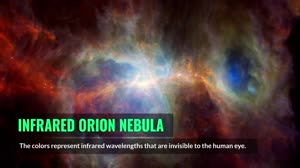
Dust and Drama in the Orion Nebula from NASA and ESA Images
Enjoy a moment of Zen with this fly-through of the Orion Nebula, based on images captured by NASA and ESA (European Space Agency) telescopes The image shows infrared light, or wavelengths that the human eye cannot see. Stars radiate little or no light in these wavelengths, so the image shows only dust. The blue light indicates warm dust, heated by radiation from large, bright stars that can release up to one million times more light than our Sun. All that radiation breaks apart dust grains and carves out cavities, like the two blue “bubbles” in the image. Much of the remaining dust is then swept away by winds from the stars or when the stars die explosive deaths as supernovae. Around the edge of the two cavernous regions, the dust that appears green is slightly cooler. Red indicates cold dust that reaches temperatures of about minus 440 Fahrenheit (minus 260 Celsius). A cold ribbon of dust starts near the bottom right of the image and threads throughout the nebula. Red and orange filaments like these are where dust condenses and forms new stars. Over time, these filaments may produce new giant stars that will once again reshape the region. These images were captured by the now-retired Herschel Space Telescope, an ESA observatory, NASA’s retired Spitzer Space Telescope, and NASA’s Wide-Field Infrared Survey Explorer (WISE), which now operates under the moniker NEOWISE. Spitzer and WISE were both managed by NASA’s Jet Propulsion Laboratory, a division of Caltech, in Southern California. For more information about NASA’s Spitzer mission, go to: https://www.ipac.caltech.edu/project/spitzer For more information about WISE, go to: https://www.nasa.gov/mission_pages/WISE/main/index.html Credit: NASA/JPL-Caltech

Earth from Space
Earth Views from the International Space Station
The International Space Station’s High Definition Earth Viewing (HDEV) experiment is an external camera platform located on the Columbus module of the space station. In addition to providing beautiful views of Earth, one of the goals of HDEV is to monitor the longevity and quality of its image sensors in the space environment. HDEV operations began April 30, 2014 and only a single bad pixel has been identified.
Solar System
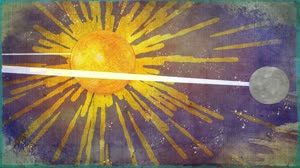
Where is the Edge of the Solar System?
Where does the solar system end? It all depends on the criteria you are using. Based on where the planets end, you could say it's Neptune and the Kuiper Belt. If you measure by edge of the sun's magnetic fields, the end is the heliosphere. If you judge by the stopping point of sun's gravitational influence, the solar system would end at the Oort Cloud.